Holding Yarn Double Isn't Actually More Expensive
The Yarn Math: Why Holding Yarn Double with Mohair Doesn’t Actually Cost More
When I chat with customers at knitting markets and they see a gorgeous pattern that calls for 4ply and mohair held together to make an 8ply (DK) weight, I hear the same thing: “I love it, but I can't afford to buy double the yarn.” The good news is that holding double doesn't mean double the cost. Depending on the price of mohair you choose, it could actually cost the same!
Here is how it works.
It’s about length, not the number of balls
When we buy yarn, we tend to count balls. If a pattern calls for 10 balls of 8ply, we assume holding two strands means we suddenly need 20 balls.
But yarn thickness changes everything. Look at the average meterage for a standard 50g ball:
-
8ply (DK): approx 100 meters / 109 yards
-
4ply (Fingering): approx 200 meters / 218 yards
Because a ball of 4ply has double the meterage of an 8ply ball, it goes twice as far. Which means you only need to buy half the number of balls for your project.
If a sweater needs 1,000 meters of yarn altogether:
-
You'd need 10 balls of 8ply.
-
You only need 5 balls of 4ply.
Right there, your base yarn budget is cut in half.
The Mohair Fund
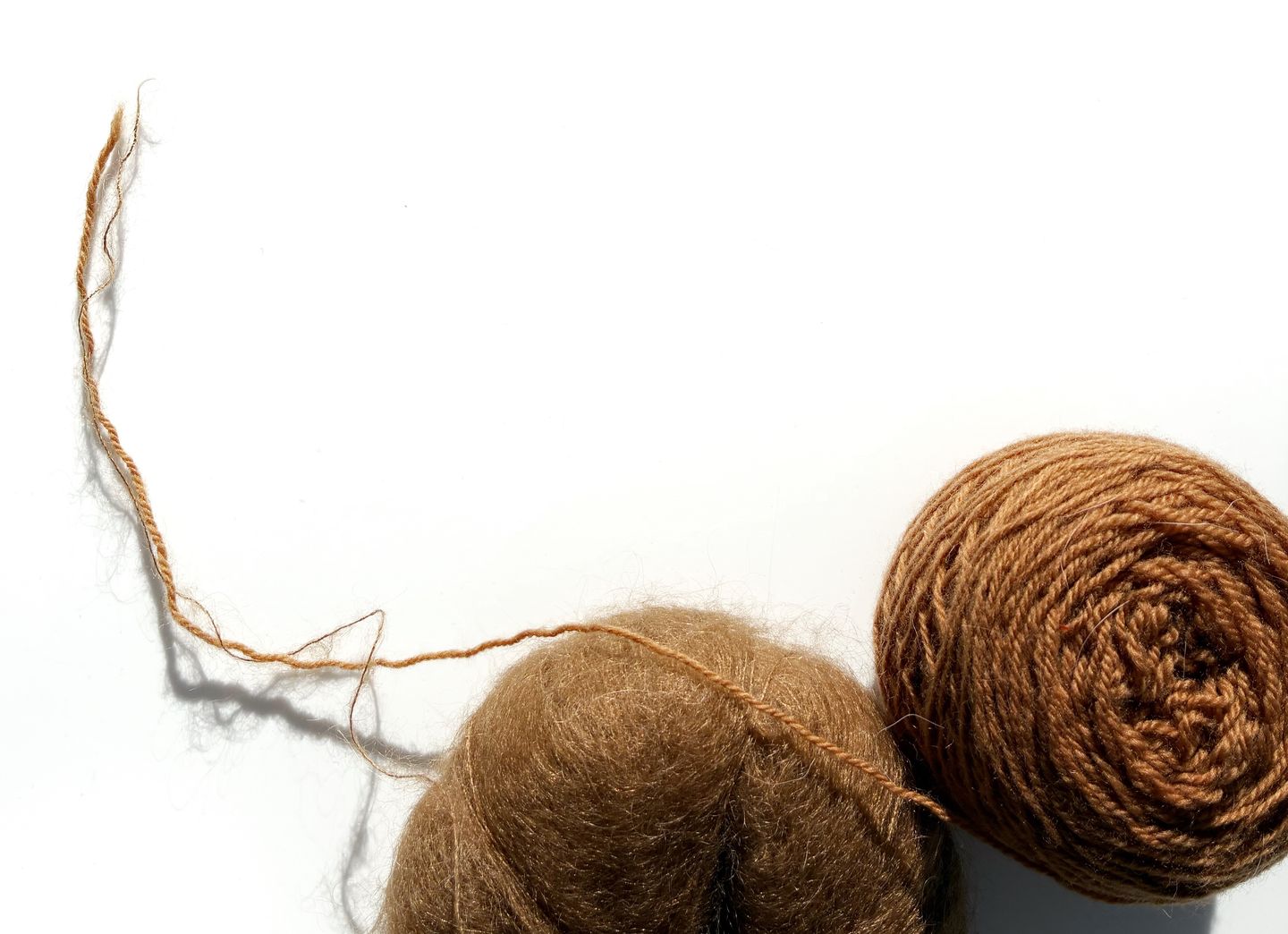
Now you take that exact chunk of money you just saved on the base yarn and you use it to buy the mohair. Because lace-weight mohair is so fine, those tiny 25g balls pack a ton of meterage (usually around 200 metres / 218 yards a pop). That's the same as the 4ply balls you no longer need.
You aren't buying double the yarn. You're just splitting your usual budget across two different textures to get the same 8ply gauge.
So if you’ve been eyeing off a fluffy project but dodging it because of the price tag, you should go get the yarn. The math checks out. Especially if your mohair price matches the 4ply price.